
The Kiln and the Form: On Making Art When the Mind Won't Settle
By Jamal AlYousif
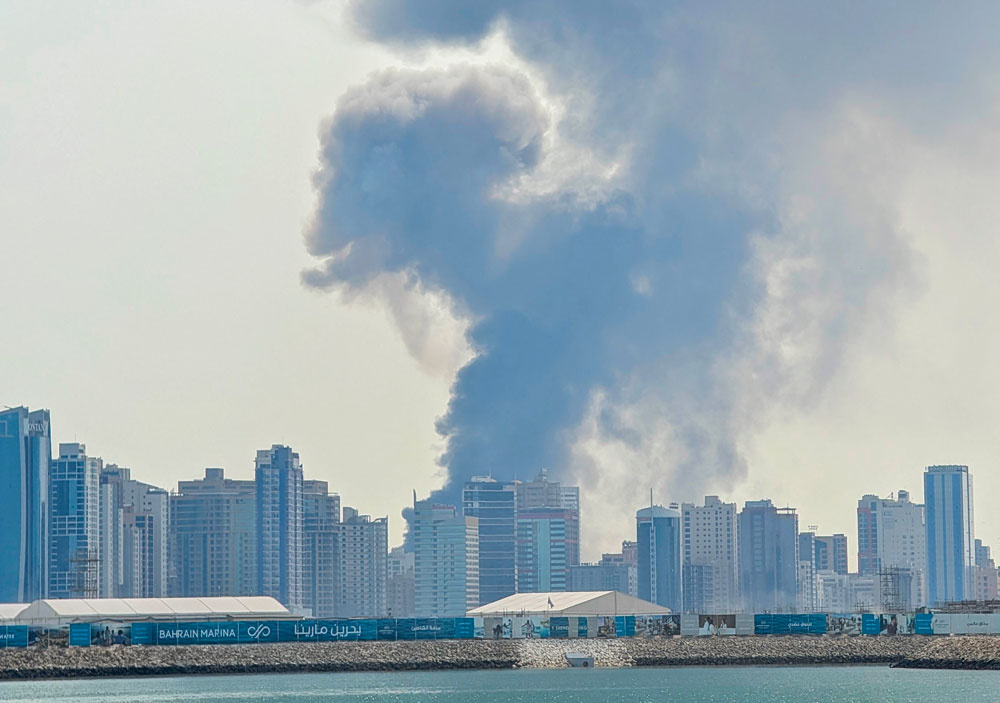
There is a particular silence that falls over a studio when the world outside is shaking. It is not the absence of sound (there is no absence of sound in the Gulf right now) but a narrowing of focus that any sculptor knows. The hands still reach for metal. The arc torch still sparks. The glass still melts. And then your phone shrieks. Every phone in Bahrain shrieks: a government broadcast, an air-raid alarm, telling you to take cover because drones have entered Bahraini airspace. This has happened more than sixty times in three days, at all hours of the day and night. You put the torch down. You wait. The interceptors hit their targets, or they don't. This is new for us. It is frightening. Then you pick the torch back up and find your place in the weld. Or you try to. The alarm passes, but your mind doesn't come back with it. It stays out there, with the news, with the people in neighbouring countries who are living through far worse, with the question of what happens next. That is the deeper disruption. Not the alarms themselves, but the preoccupation, the fact that your head is somewhere else even when your hands are on the steel. Somewhere in that gap between where your body is and where your mind has gone, you find yourself asking the question that artists in this region have been asking for decades: what is this work for, when everything around it threatens to come apart?
I am a glass and metal sculptor working in Bahrain. My studio sits on an island that has hosted a US naval base for decades and now finds itself, once again, in the crosshairs of forces far larger than itself. This is not new for the Gulf. What is new, perhaps, is the scale, and the peculiar vertigo of shaping stainless steel into forms meant to endure centuries while the news cycle measures survival in hours.
But I keep working. Not every day. There are days and sometimes weeks when I don't, when the weight of it wins and the studio sits empty. But I keep coming back. Not out of denial, and not out of some romantic notion that art transcends war. I keep coming back because it is what I know how to do, and because the history of art in this region tells me, with considerable evidence, that the work made during and after conflict is often the most necessary work of all.
A Region That Has Done This Before
The Gulf's relationship with conflict and artistic expression is long and deeply instructive. When Iraqi forces invaded Kuwait in August 1990, Thuraya Al-Baqsami, a leading Kuwaiti painter and printmaker, did not stop painting. She painted more. During the seven months of occupation, she produced eighty-five works, painting day and night in what became her Invasion 1990–1991 series. Before the war, as she later reflected, Kuwaiti art was largely occupied with landscapes and pleasant domestic scenes. After liberation, everything changed. For years, she said, you could not find a painting of a vase or a flower. Every artist was compelled to reckon with what had happened, not only through visual art but through literature, theatre, and music.
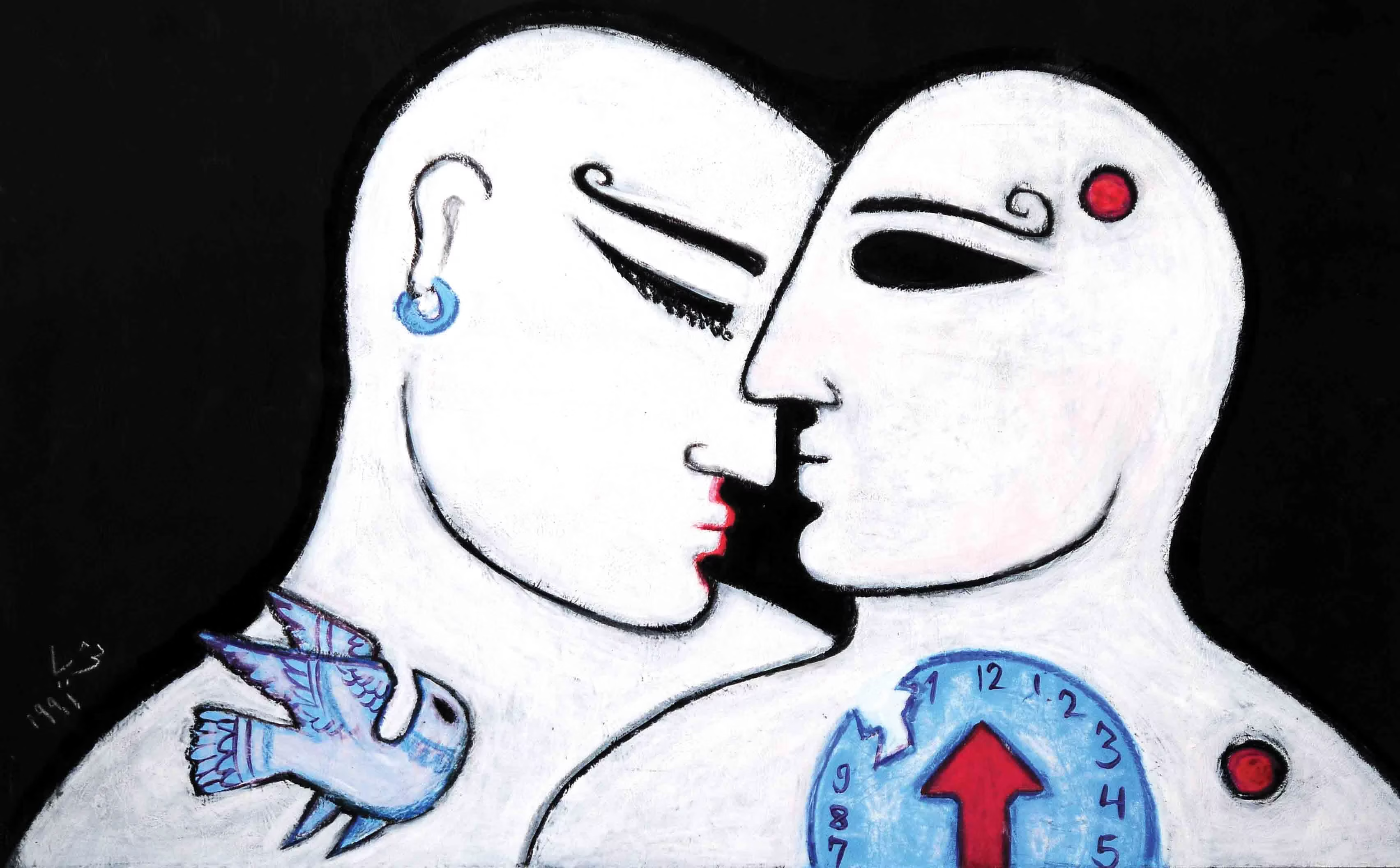
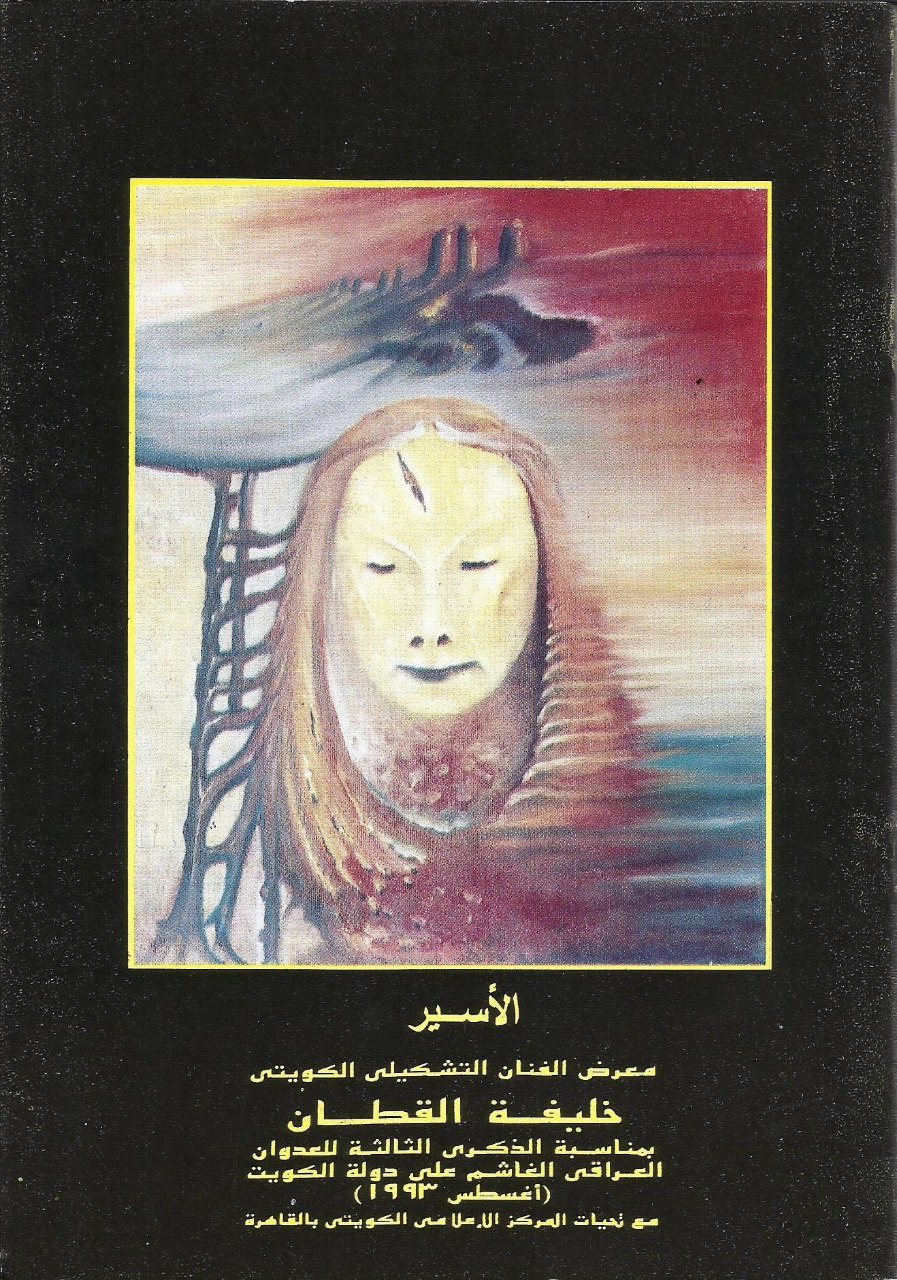
Khalifa al-Qattan, the pioneering Kuwaiti painter, channeled the horror of occupation into searing works depicting torture and human suffering. Paintings like The Martyr's Plant and The Document carried attached reproductions of papers authorizing the torture of resistance members. These were not beautiful works in any decorative sense. They were necessary ones.
And it was not only the artists who were transformed. The entire cultural infrastructure of the Gulf shifted. Kuwait's cosmopolitan art scene, battered by war and its aftermath, saw its energy migrate. Bahrain became what many called "the new Beirut," absorbing cultural momentum just as Lebanon had once absorbed it from elsewhere. The Bahrain Arts Society, founded in 1983 by thirty-four artists who petitioned the government for a non-profit cultural organisation, became a vehicle for this transition. The roots were already there. The Arts and Literature Club had been established in 1952, and Manama hosted its first art exhibition in 1956. But conflict accelerated and deepened the cultural conversation.
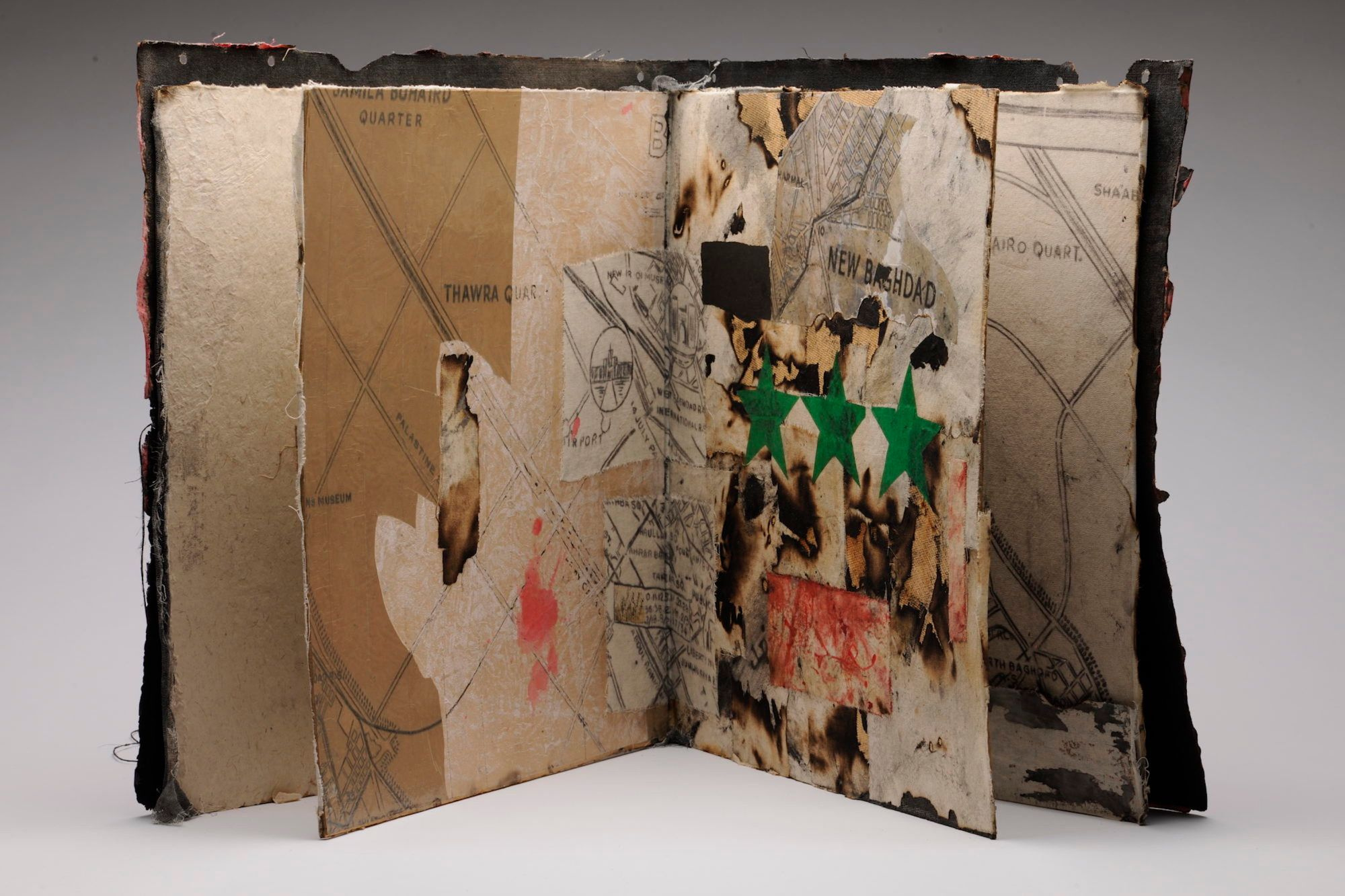
This is a pattern that repeats across the region. The MoMA PS1 exhibition Theater of Operations: The Gulf Wars 1991–2011, which brought together over two hundred and fifty works by more than eighty artists, demonstrated something essential: that war does not silence art. It redirects it. The portrayal of conflict permeated image culture, changed what artists felt compelled to make, and expanded the boundaries of what Gulf art could be.
The Bahraini Inheritance
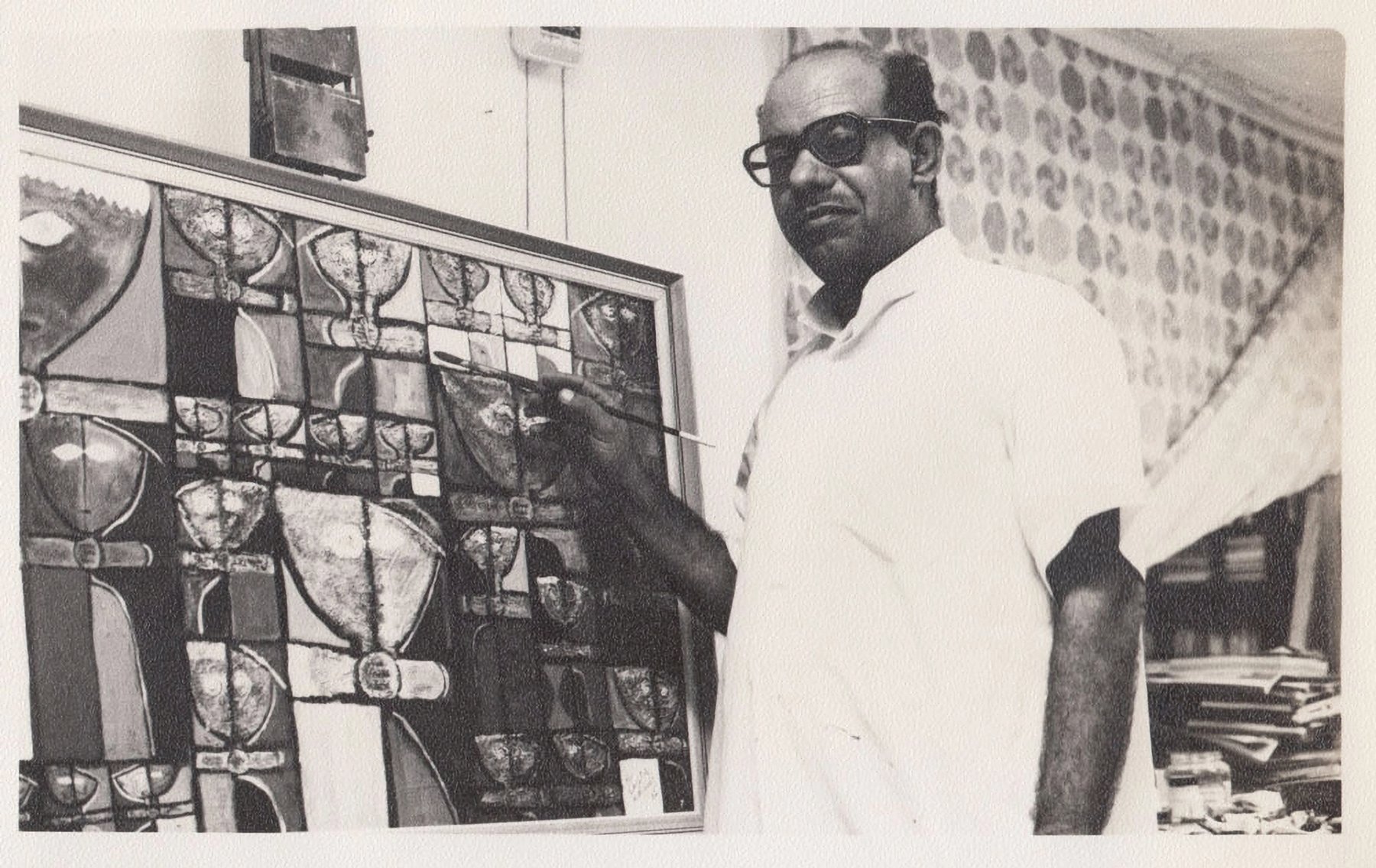
My father, Nasser Al-Yousif, was born in the Al Hayayeek neighbourhood of Muharraq in 1940. He was a self-taught artist in a country that had no fine arts institutions, no academies, no galleries. Nothing but a few young men with a hunger for beauty and a willingness to walk. Every weekend through the 1950s, he and his companions (Abdulkarim Al-Orrayed, Ahmed Baqer, Karim Al-Bosta, Rashid Al-Oraifi) would stroll through Bahrain's souks, harbours, and palm groves with their sketchpads, drawing the life they saw disappearing under the wheels of modernisation. They were not trained. They had no curriculum. They taught themselves from whatever books and periodicals they could find at the British Council. As my father later wrote, "All we had was our desire for painting, but little in the way of artistic culture. Our discussions became sprinkled with expressions like colour, composition, shadow, light and distance." By 1960, Al-Orrayed had rented a shop on Shaikh Abdulla Street that became the country's first art salon, an informal gathering place where these pioneers could meet, argue, and push each other forward.
From that hunger, my father and our family established the Al Talib Stationery Store, which became far more than a shop. It sold painting supplies and art books, but more importantly it became a permanent exhibition of his work, a gathering place for artists, and a source of culture in a country that was still building its cultural infrastructure from scratch. This was the pattern of the Bahraini pioneers: they did not wait for institutions. They built them, one bookshop, one salon, one exhibition at a time.
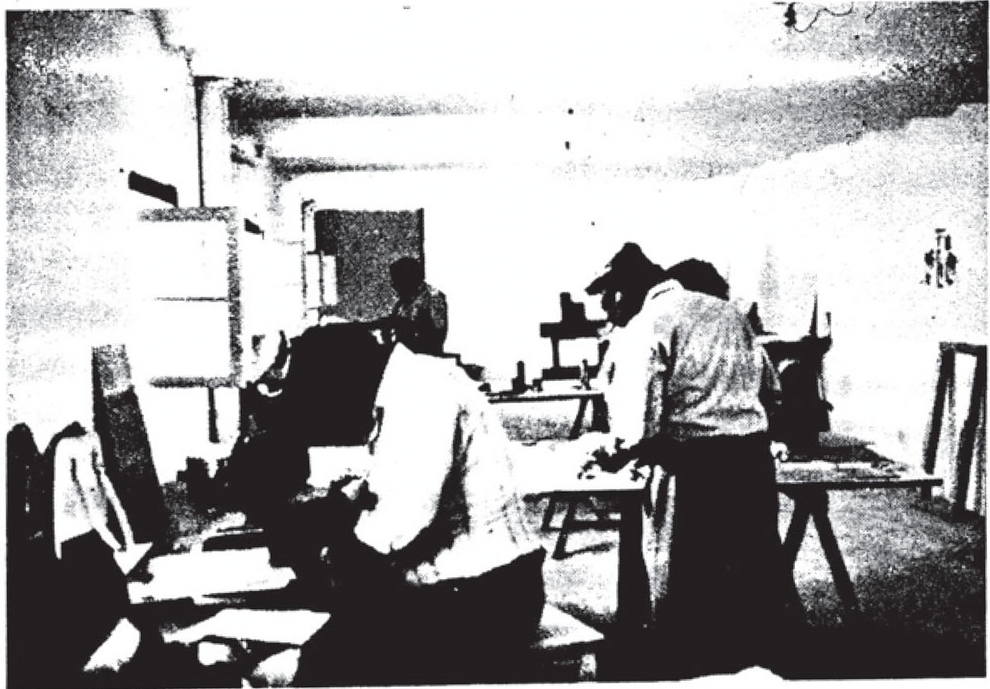
In 1980, my father travelled to the Asilah Arts Festival in Morocco, where he joined a printmaking workshop run by the Sudanese master Mohamed Omar Khalil. The experience transformed him. Upon his return to Bahrain, he imported four printing presses and the zinc plates needed for etching, because the equipment simply did not exist in the country. When the proper varnish could not be found, he manufactured his own inks from black tar mixed with turpentine and heated over an open flame. He then organised Bahrain's first-ever exhibition dedicated to engraving, held at the Alumni Club in 1982. He did not just make art. He built the conditions for art to exist.
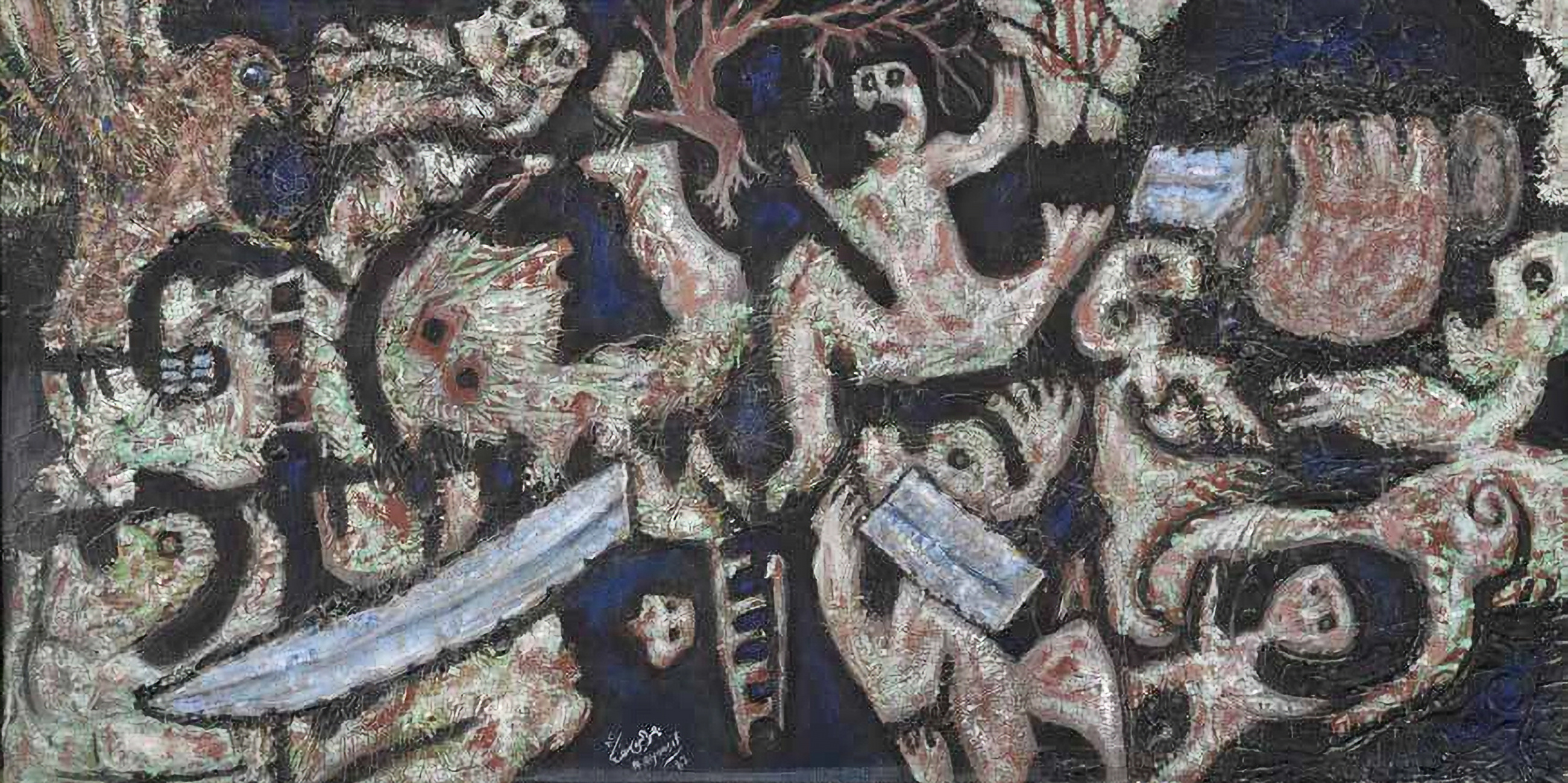
I tell you all of this because of what happened next. In the late 1980s, my father's eyesight began to fail. By 1992, he was completely blind. Diabetes had taken everything. For most artists, for any artist really, this would have been the end. The most important of the five senses, gone. The career, finished.
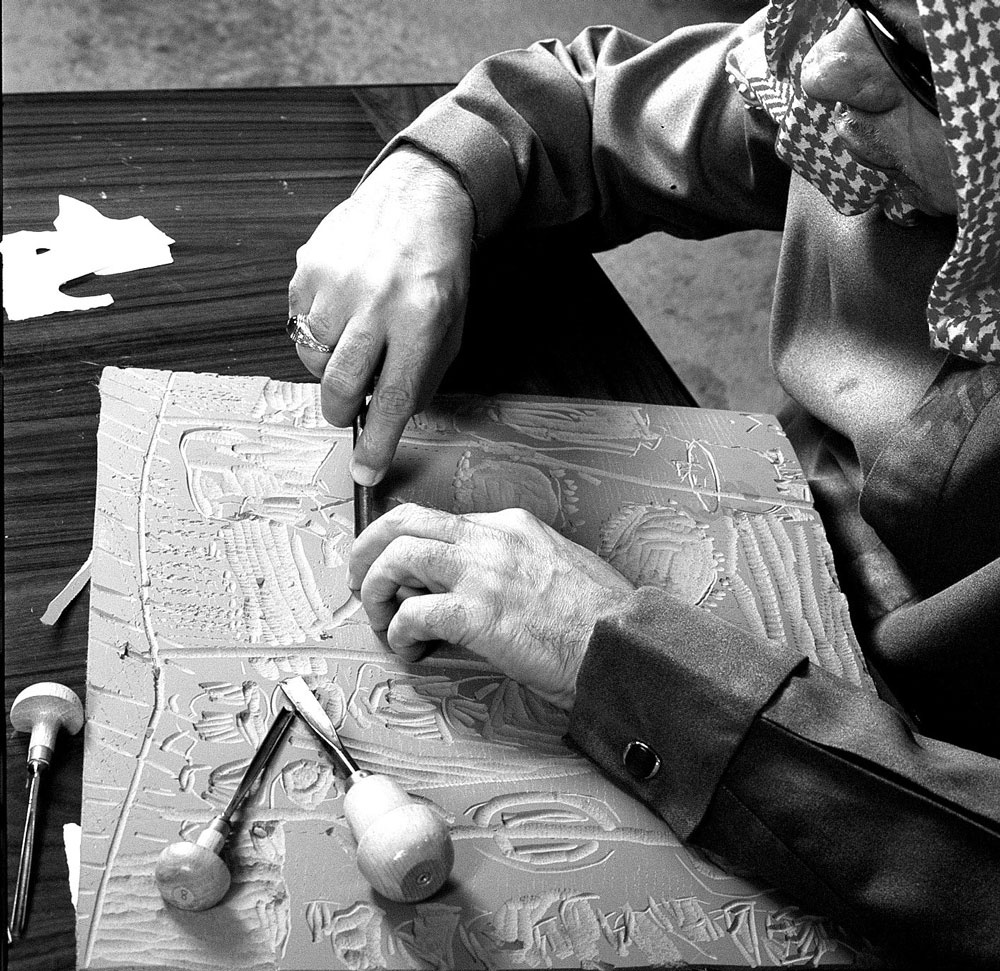
My father refused. He returned to linoleum printing and developed his own method to work without sight. He would cut shapes from thicker paper (figures, buildings, animals, decorative elements) in the forms he envisaged, then arrange these cut pieces on the linoleum plate using temporary adhesive tape, composing the entire scene by touch, judging perspective and distance with his fingers. Once the composition was set, he used the paper shapes as guides for his carving tool, tracing their edges to transfer each contour into the plate. When all the outlines were carved, he would then work from his internal vision and tactile memory to carve the interior of the painting, deciding on pattern, texture, and shade through touch alone. His hands replaced his eyes, but it was not improvisation. It was a system he invented because he refused to stop. He worked from the vast storehouse of images he had accumulated over decades of looking: the alleyways of Muharraq, the carved wooden doors he had run his fingers across since childhood, the wedding processions, the pearl divers, the women and roosters and domed entrances of old Bahrain. All of it lived inside him, and he pulled it out, print by print, in the darkness. His later exhibitions were titled "The Challenge" and "More Than Meets the Eye." He summarised his experience simply: he did not need his eyes to finish the works, as long as his heart and his soul were filled with light.
He past away in 2006. I am his son. And I tell you this not as art history but as inheritance. When I stand in my studio today, shaping stainless steel while interceptors cross the sky above Bahrain, I am not doing anything new. I am doing what my father taught me. The circumstances that say you should stop are never a reason to stop. The darkness, whether it lives behind your eyes or falls from the sky, is not the end of the work. It is the condition under which the work becomes most necessary.
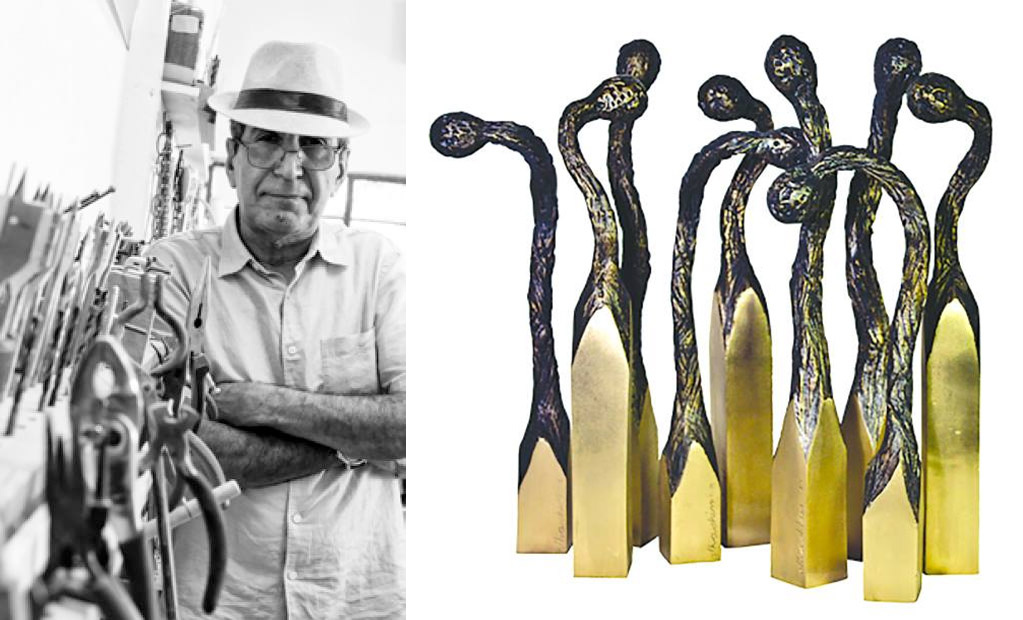
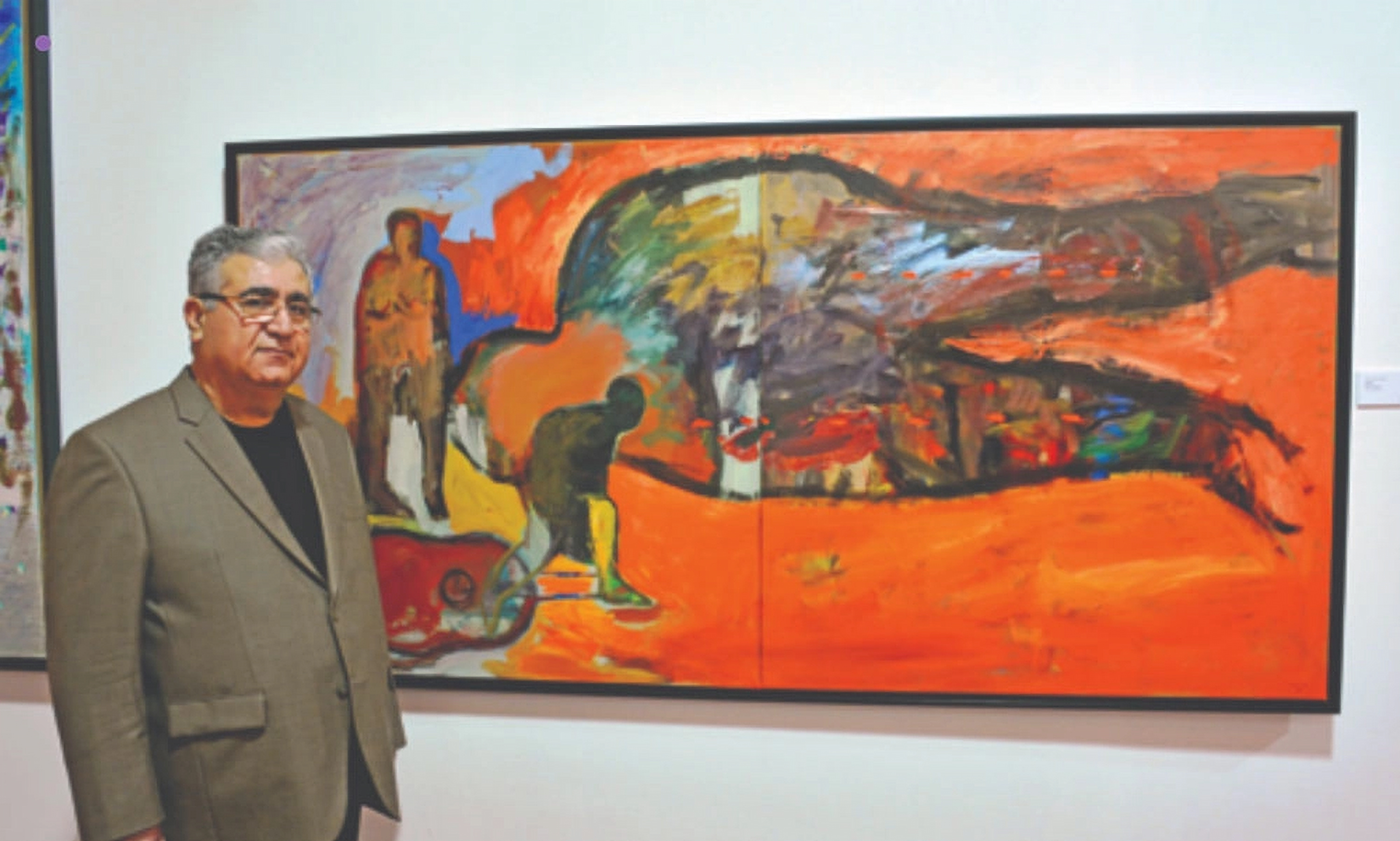
The other Bahraini pioneers carried this same stubbornness. Khalil Al-Hashimi, who earned his master's degree from the Academy of Fine Arts in Leningrad, brought sculpture to Bahrain as a serious practice. AbdulRahim Sharif left for Paris in 1974 to study at the École des Beaux-Arts and made vivid paintings about alienation and disconnection, themes that feel uncomfortably current. The Bahrain Annual Fine Arts Exhibition, now in its fifty-secound year, has run continuously through every period of regional turbulence. It did not stop during the Gulf War. It did not stop during the upheavals of 2011. It will not stop now. I showed my "Abstract Faces" series there, layered and melted glass pieces that explore identity through distortion and accumulation. The work felt urgent then. It feels more urgent now.
What Glass and Metal Know About Destruction and Renewal
There is something about working with glass and steel that teaches you, physically, about the relationship between destruction and creation. Glass must be shattered and melted to be reformed. Steel must be cut, heated, bent, and welded. The violence of the process is inseparable from the beauty of the result.
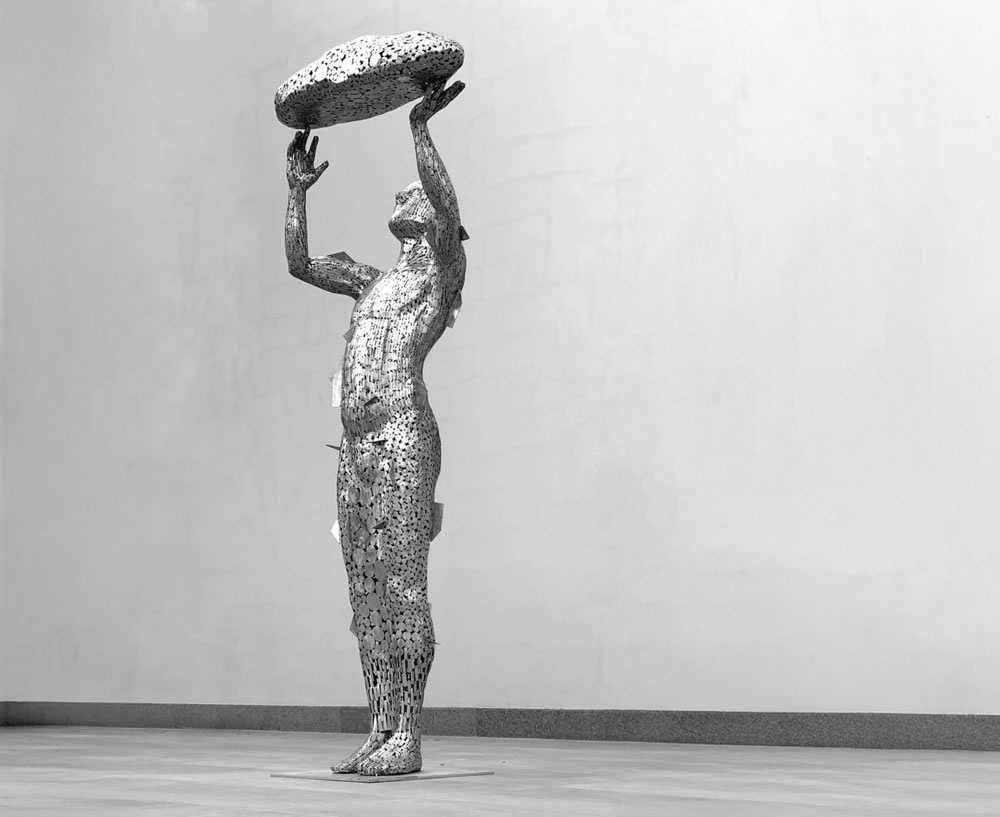
My sculpture He Dares to Dream is, in many ways, the work that speaks most directly to this moment. It stands 2.75 metres tall: a human figure built entirely from recycled fragments of stainless steel, welded together piece by piece. Sharp shards of metal protrude from the body like thorns or shrapnel, referencing pain, agony, the wounds we carry. And yet the figure is not collapsing. It is reaching upward, both arms raised, holding aloft a cloud-like form welded together from stainless steel pieces, a passing fragment of beauty overhead. The figure is in pain, yes. But it is mesmerised. It has not stopped looking up.
I made that piece in 2019, before any of this. But art has a way of knowing things before we do. The figure in He Dares to Dream is every artist in this region right now: wounded, surrounded by sharp edges, but still reaching for something luminous. Still believing that the act of reaching matters.
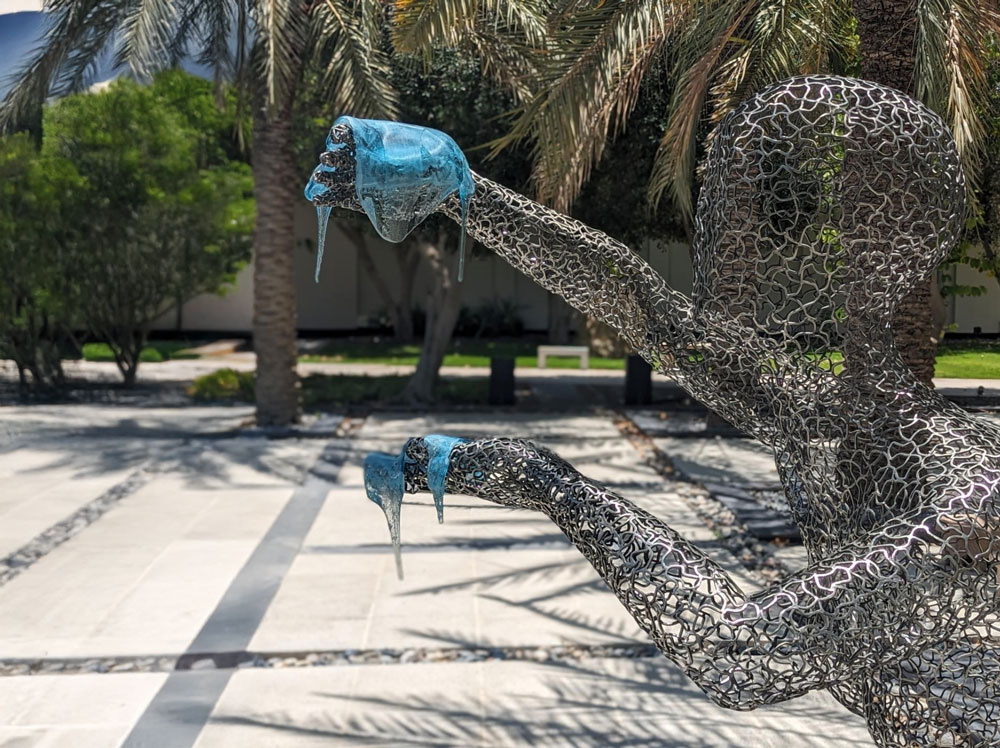
Its companion, Lost Dreams (2021), uses the same welded lattice technique but arrives at a different posture. Here the figure is over two metres tall but kneeling, earthbound, cradling forms of hand-sculpted glass that seem to be slipping away. Where He Dares to Dream reaches upward, Lost Dreams reckons with what has already been lost. Together, these two sculptures form a conversation that I did not fully understand when I made them. Now I do. They are the two states that every person in this region inhabits simultaneously: the reaching and the grieving, sometimes in the same hour.
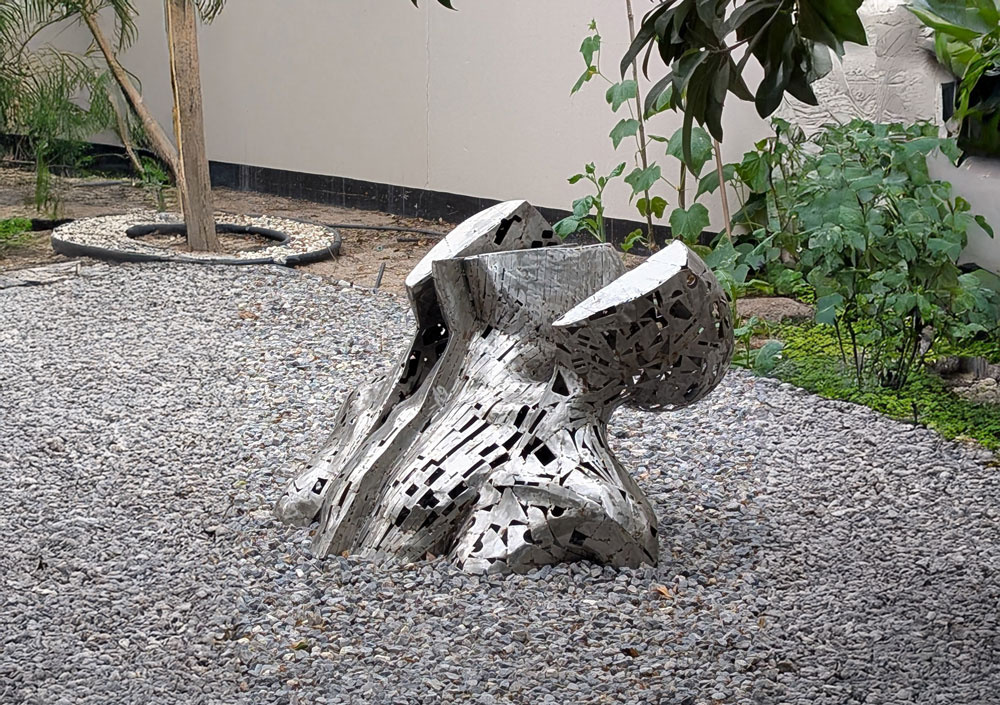
And then there is Doubts (2020), built from the same welded stainless-steel fragments as the other figures, but here the body has split. Two half-torsos, one male and one female, are shifted apart from each other, each carrying half a head that is also displaced, pushed slightly forward or back from its counterpart. All the half-heads are arched backward, faceless, looking up as if asking why. There is no answer in the sky and no features on the faces to receive one. Just anguish, directed upward, from bodies that cannot fully come together. I would be lying if I said that the posture of He Dares to Dream is the only one I know. Some mornings it is Doubts that tells the truth: the fracture, the not-knowing, the question of whether any of this matter when everything outside the studio is uncertain. I include it here because an article about resilience that refuses to acknowledge doubt is not an honest article. The doubt is real. The fracture is real. What matters is that the figures in Doubts are still looking up. Not with hope, like He Dares to Dream, but with the raw demand for meaning that comes before hope is possible.
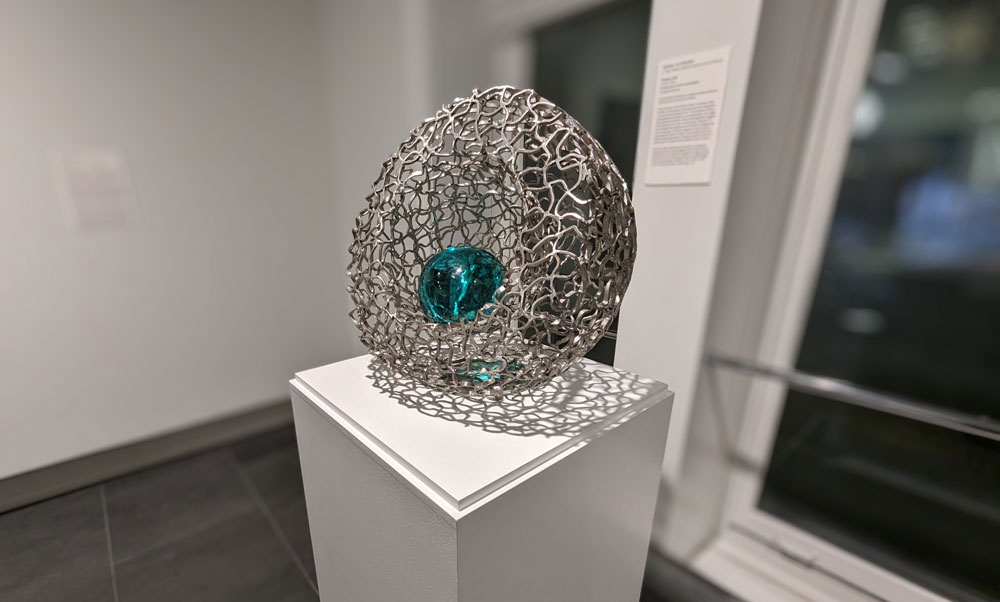
Then there is Protection (2022), an intricate sphere of welded stainless steel, organic and coral-like in its structure, sheltering a luminous glass orb at its centre. I think of it now as a statement about what art does during crisis. The steel lattice is open, permeable, not a fortress. You can see through it. Light passes through it. But it holds the fragile thing at its core. That is what culture does for a society under pressure: not an impenetrable shield, but a structure that cradles what is most vulnerable and most beautiful.
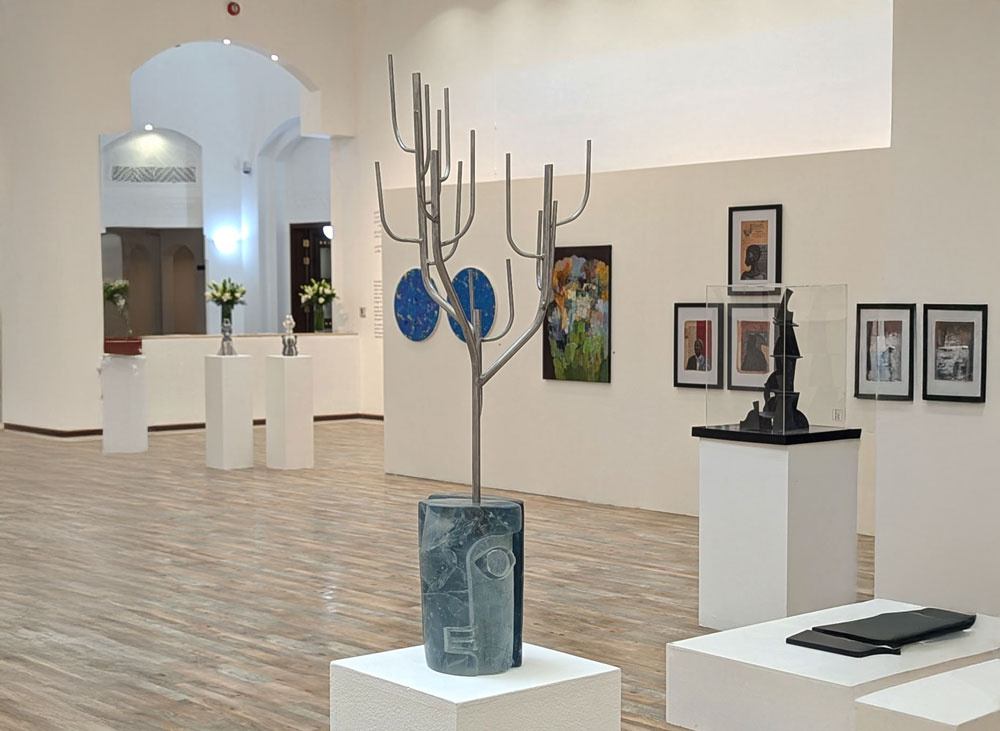
Growth (2024) pushes this further. A cast glass block carries one of my recurring face forms, and from its top a slender steel tree branches upward, bare but alive. The face is the foundation: identity, memory, the accumulated weight of who we are. The tree is what emerges from it. It insists that even from the densest, most compressed experience, something new can grow. I made it months before the current crisis. It means more to me now than when I finished it.
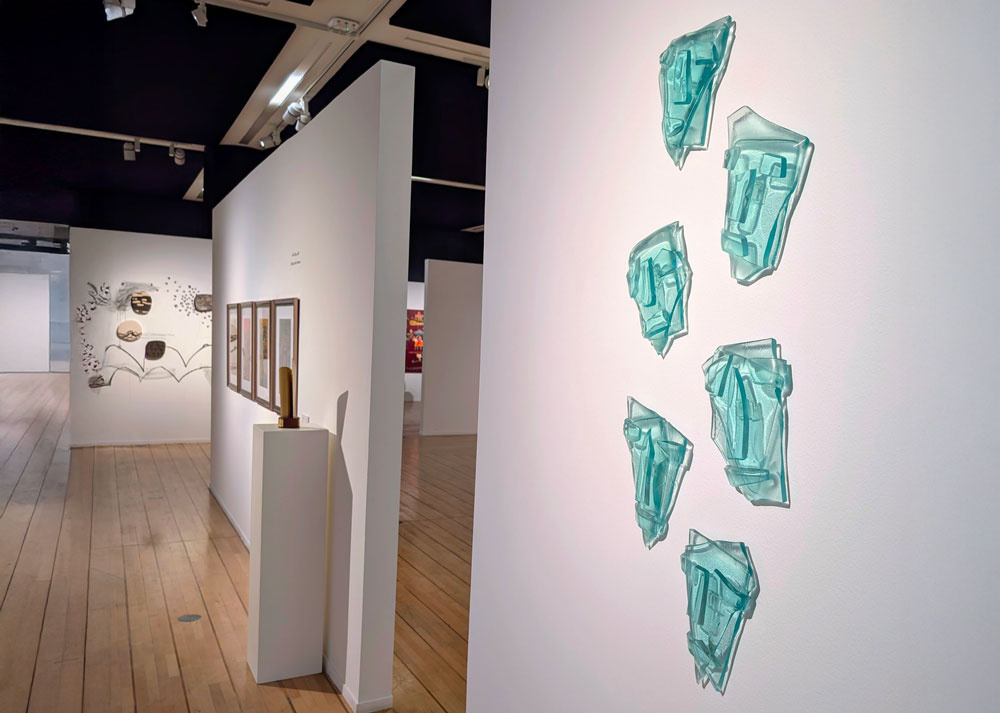
The "Abstract Faces" series works differently but arrives at a similar truth. Layers of glass are melted and fused, each layer carrying its own texture, its own history of heat and pressure. The faces that emerge are not portraits of specific people. They are accumulations, identities built from the weight of experience, shaped by forces both intentional and uncontrollable. In a region where identity is constantly being negotiated between tradition and modernity, between local roots and global pressures, between the desire for stability and the reality of upheaval, these layered faces feel like honest mirrors.
The Practical Realities
I would be dishonest if I wrote only about meaning and metaphor. The practical reality for artists in the Gulf right now is severe. Architectural commissions, the lifeblood of a sculptor who makes site-specific work for hotels, museums, and public spaces, depend on construction timelines, investor confidence, and functioning supply chains. All three are under pressure. Airports are shut. Flights are grounded. The hospitality sector, which drives so much of the demand for large-scale installation work, contracts sharply when tourists cannot arrive and when the insurance premiums on new developments spike.
This is not abstract for me. I have pendant light sculptures installed at the Kanoo Museum. I have Family, a permanent marble sculpture at Bahrain International Airport's arrivals terminal, an abstract form depicting figures leaning into one another, carved from a single block of stone, greeting every traveller who lands on this island. Given that the airport itself has been in the news these past days, that sculpture has taken on an unintended new gravity. A work about belonging and homecoming, standing in a place that the world now associates with missile interceptions. I have been building relationships with art consultancies across the GCC for the past year. That pipeline does not disappear, but it pauses. For an independent studio artist, a pause of even a few months can be financially existential.
But here, too, history offers instruction. After the 1991 Gulf War, the reconstruction effort across Kuwait and the wider Gulf generated an enormous wave of cultural investment. Governments and developers, eager to signal resilience and forward momentum, poured resources into public art, cultural institutions, and architectural commissions. The Sharjah Biennial was founded in 1993. Albareh Art Gallery opened in Bahrain in 1996. Al Riwaq Art Space opened in Bahrain in 1998. The entire infrastructure of Gulf contemporary art that we now take for granted was built, in large part, in the aftermath of conflict.
The demand for art that speaks to identity, resilience, and the endurance of culture does not diminish during crisis. It intensifies. The question is whether individual artists can survive the gap between the destruction and the rebuilding.
I try to write my morning pages, three pages, by hand, before the studio opens. Some weeks I manage it every day. Some weeks I don't write at all, and I don't work at all, and the studio sits there waiting. It is Ramadan as I write this, and the days are shorter and slower. Some mornings the pages are full of anxiety about contracts, about the economy, about the conflict and what it means for the people closest to it. Other mornings they are full of ideas for new work, forms that could not have occurred to me a month ago, shapes that emerge only when the familiar world is made strange by disruption.
This is what artists do. Not because we are braver or more resilient than anyone else, but because the practice, showing up, shaping material, trying to make something that holds together, is how we process the world. It is how we have always processed the world, in this region and everywhere.
Al-Baqsami painted eighty-five works during the Kuwait occupation. Al-Qattan turned suffering into paint that still burns decades later. My father carved linoleum prints in total darkness, pulling an entire world from memory with his fingers, because he refused to believe that blindness was a reason to stop seeing. He made his own inks from tar and turpentine. He ordered printing presses into a country that had none. He mounted an exhibition about massacre when every other artist looked away. And when the lights went out, permanently, irreversibly, he kept going, because the work mattered more to him than the conditions under which it was made.
I think about him every time I strike an arc or polish a surface. He did not stop. Neither will I.
Jamal AlYousif is a glass and metal sculptor based in Bahrain, specialising in site-specific architectural sculptures for hospitality, cultural, and public environments. He is the son of the pioneering Bahraini artist Nasser Al-Yousif (1940–2006) and the founder of Jamal AlYousif Studio.